
Services
Air Sealing
We hunt down the leaks — attic hatches, top plates, pipe and wire penetrations, recessed lights — and seal them. Insulation's essential partner.
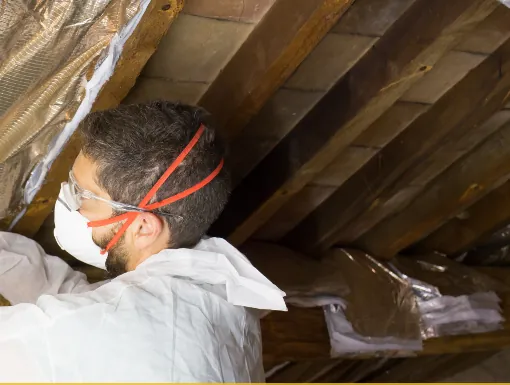
Insulation slows heat moving through materials. It does almost nothing about heat carried by moving air — and homes leak air from a hundred small holes: the attic hatch, the gaps where pipes and wires pass through top plates, recessed light cans, chimney chases, dropped soffits. In winter, your heated air escapes through the top of the house and pulls cold air in at the bottom. That's the stack effect, and it runs all season, in both directions.
Air sealing is the unglamorous work that makes insulation perform: foam, caulk and rigid covers applied leak by leak in the attic floor and other key boundaries. It's why we seal before we insulate on every job — new insulation laid over open leaks is money spent at a discount.
What's included
- Top plates, wire and pipe penetrations sealed across the attic floor
- Attic hatch weather-stripped, insulated and latched tight
- Recessed lights and bath-fan housings addressed safely
- Chimney and flue chases sealed with code-appropriate materials
- Basement rim-joist and sill leaks sealed from below
Book Your Free Assessment
Tell us what you need and we'll call you back to confirm. Rather talk now? (855) 640-0404 — answered 24/7.
How it works
Our Process
Find the leaks
We read the attic the way air does: dust-stained insulation marks the leaks, and we map every penetration before touching material.
Seal the big ones first
Chases, dropped soffits and open wall tops are capped and sealed — these move more air than a hundred small holes.
Seal the small ones
Every wire, pipe and fixture penetration gets foam or caulk, bay by bay.
Then insulate
With the boundary sealed, new insulation goes in over a floor that no longer leaks — the order that makes both work.
Questions
Air Sealing — FAQs
A house needs controlled ventilation, and simply sealing leaks in an existing home essentially never overshoots — the leaks in a typical house add up to a wide-open window. If your home has combustion appliances, we work with the care they require and flag anything that needs a professional look.
Because the two do different jobs. Insulation over open leaks still lets your heated air pour out — it's like wearing a sweater in the wind without a jacket. Sealing first is what lets insulation hit its rated performance.
Dust-darkened streaks in attic insulation are leak fingerprints, and rooms that draft near hatches, lights and outlets tell the same story. Our assessment maps the major leaks for you, with photos.
Yes — and it's often the highest-value single visit we make, especially paired with even a modest insulation top-up. Your quote will separate the two so you can see what each does.